

The Project
Linguistic variation in Khotanese and the periodisation of the language are among the most debated topics in the study of Central Asian languages. The KhoTxt project aims to shed new light on the rich cultural landscape of the Khotan and Dunhuang regions through a comprehensive reconstruction of the diasystemic nature of the Khotanese language and its written tradition. Rather than treating Khotanese as a single, uniform system, the project approaches it as a diasystem: a language shaped by time, place, social context, and textual practice. To do so, KhoTxt brings together all available linguistic and extra-linguistic evidence. The project adopts a multidisciplinary and multimodal approach, combining socio-historical linguistics, philology, palaeography, orthography, codicology, genre studies, material analysis of the manuscripts, and digital humanities. This integrated perspective allows us to better understand not only the language itself, but also the people, practices, and cultural networks that produced and used these texts.
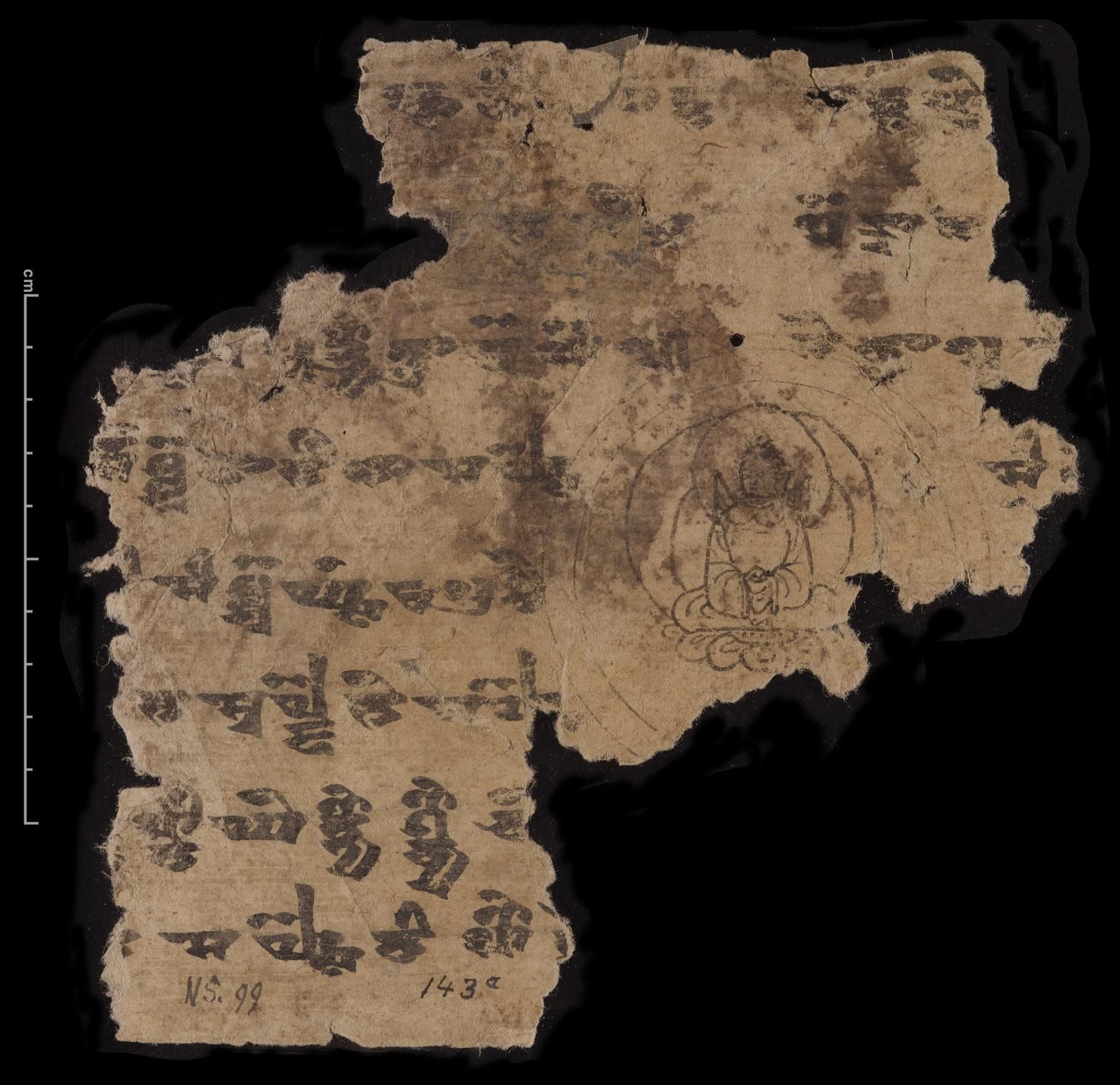
IOL Khot 161/4 © British Library Board
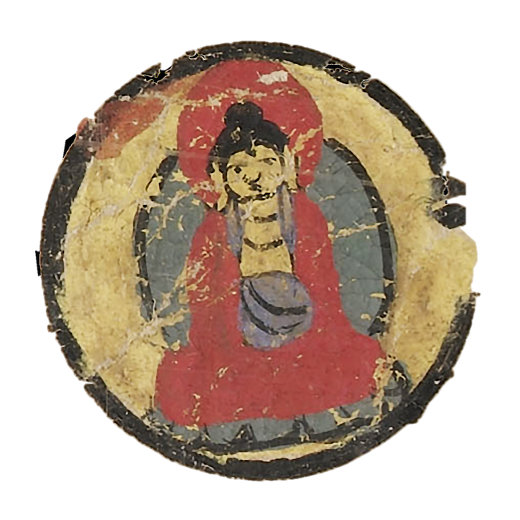
IOL Khot 60/1, detail © British Library Board
The Khotanese language
Khotanese is an Eastern Middle Iranian language once spoken and written in the Tarim Basin (present-day Xinjiang Uyghur Autonomous Region, China). Located on the eastern fringes of the Iranian world, this area was a crossroads of cultures, languages, and religions. The bulk of the extant Khotanese corpus comprises manuscripts that preserve Buddhist religious texts, alongside literary, medical, secular, and administrative documents. The manuscripts cover a period of about 600 years, dating from the fifth to the tenth century. During the first millennium, Khotan served as a pivotal hub for the diffusion of Buddhism and Āyurvedic medicine from India to Central Asia and from there to China and Tibet, and it played a prominent role in the socio-historical relationships of Central Asia. The study of the Khotanese language and its texts lies at the crossroads of multiple fields, including Iranian philology, Indo-Iranian and Indo-European linguistics, contact linguistics, Indo-Tibetan and Chinese studies, Buddhist studies, Central Asian history, the history of Āyurvedic medicine, and the art and archaeology of Central Asia.
About
The project Khotanese Language and Texts in Context: A multimodal approach to the classification and periodisation of the Khotanese language and its texts within the cultural and historical framework of medieval Central Asia is funded by the Italian Ministry of University and Research (Ministero dell’Università e della Ricerca) through the Fondo Italiano per la Scienza (FIS) programme (Starting Grant no. FIS-2023-01116). The project is hosted at Sapienza University of Rome.
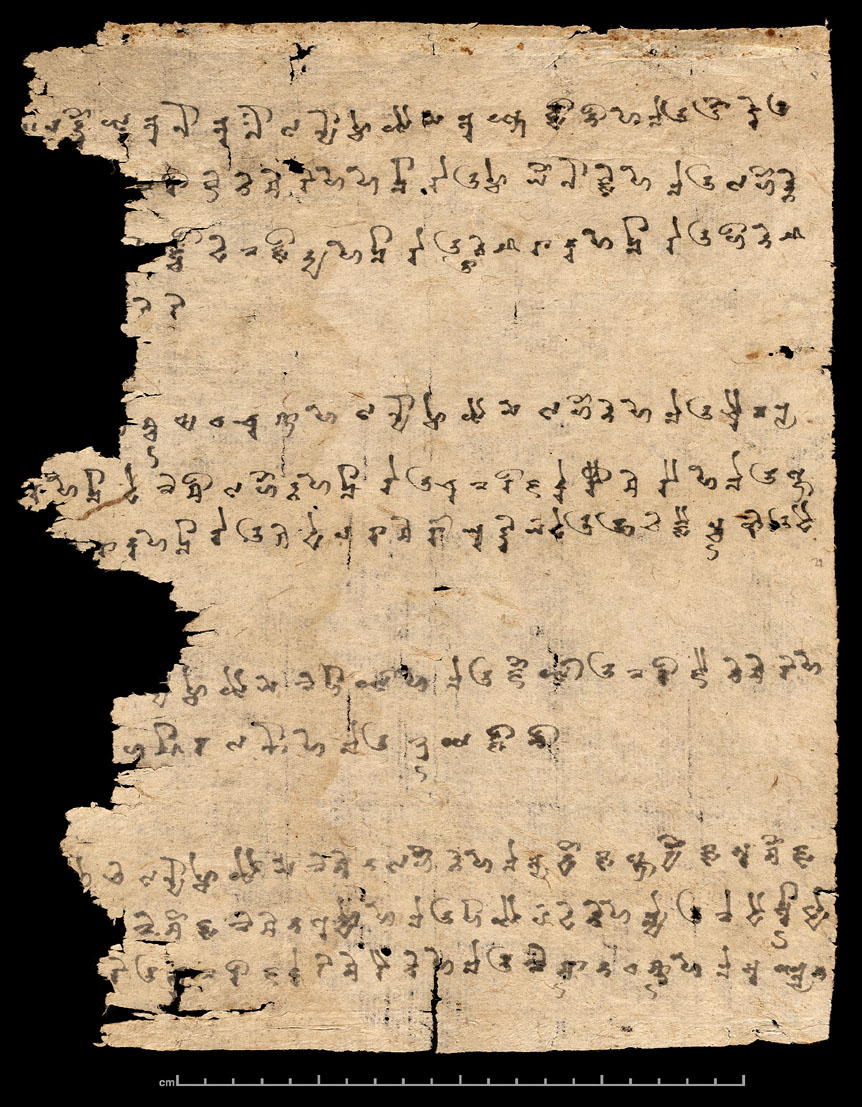
Or. 11252/1, detail © British Library Board
Latest News
DISCOVER MORE AT PUBLICATION & OUTPUTS
Forthcoming publication
Mauro Maggi’s article ‘Main and subsidiary initials in siddham: On the structure of the Jīvakapustaka (manuscript Ch.ii.003)’ has been accepted for publication in the forthcoming volume of Annual report of the International Research Institute for Advanced Buddhology at Soka University 29.
New publication
Alessandro Del Tomba just published two articles on the phonology and palaeography of r and rr in Khotanese.
Conference presentation
Alessandro Del Tomba and Marco Fattori presented two papers on Late Khotanese metrics at the 35th Deutscher Orientalistentag DOT 2025, FAU Erlangen-Nürnberg, September 08–12, 2025 and at the international conference Beyond the Mountains. Ancient Languages in and around the Tarim Basin, Peking University, Beijing, September 20–21, 2025.